
Summary
What is forced perspective?
Forced perspective is making objects in a photo that relate to each other appear larger or smaller, closer or farther than they really are.
It’s usually used to create an optical illusion, using subjects in a photo for an obviously creative effect; a fun photography effect. By intentionally arranging objects in certain ways, you make it look like some objects are larger or smaller than they really are.

Somethings not right here. Either the flash is miniature, or the camera is gigantic.
But it’s just an illusion. Here’s the real setup:

I’m more into art than optical illusions so what I want to show you here is how to incorporate the concept of forced perspective as an artistic composition technique. When implemented into your photos, it helps to grab and hold the attention of the viewer. And that’s the whole point of composition right? To attract and hold the attention of the viewer for as long as possible?
So, here’s how it works.
Viewers perceive objects around them to be a certain size. When objects are made to appear larger or smaller, it challenges the common perception of that object to the viewer. So when a viewer’s perception is challenged, their attention is involuntarily peeked. The photo has grabbed their attention. Something about the photo is different . . . an element appears larger or smaller than normal. The photographer has presented a common object in a unique or way, and it’s grabbing the viewers attention.

But beyond that, and more importantly, this effect helps add the illusion of depth in your photo. When using forced perspective, objects that are usually small appear bigger and so thus feel closer, and objects that are usually large are smaller and feel further away. So the scene suddenly becomes visually deeper! We’re just exaggerating things to create a more obvious sense of scale, and this is creating the illusion of depth in an otherwise flat, two-dimensional image. This sense of depth attracts more viewers who view it for a longer time, and this is exactly what we want.

How to incorporate forced perspective
So, here’s how we do it:
- Choose a background subject. The background element is usually large, like a building, mountain, or some prominent element in the landscape.
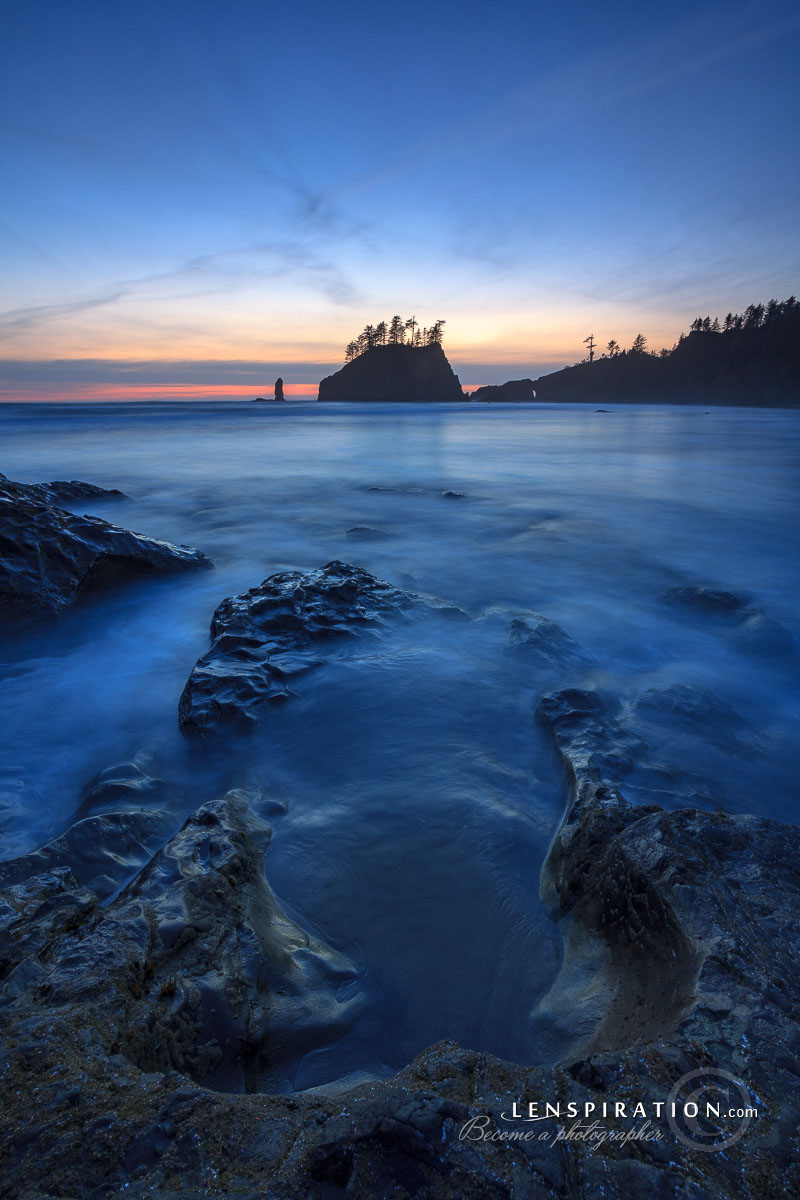
- Find yourself a distinct foreground element. Foreground elements are usually small, like a rock, flower, or pattern in the sand.
- Get out your wide angle lens. Incorporating forced perspective is one of the main reasons I have a full frame camera. It allows wide angle to truly appear wide angle!
- Get nice and close to the foreground element. Verticals usually work better than horizontals.
- Compose the shot like any other shot. Filling the frame is the name of the game, and make sure each element in the frame has a purpose.

When it works and when it doesn’t
I use forced perspective in all types of photography, but mostly landscape. Most objects can be exaggerated in size without sacrificing the integrity of it’s shape, like rocks, grass, and clouds.
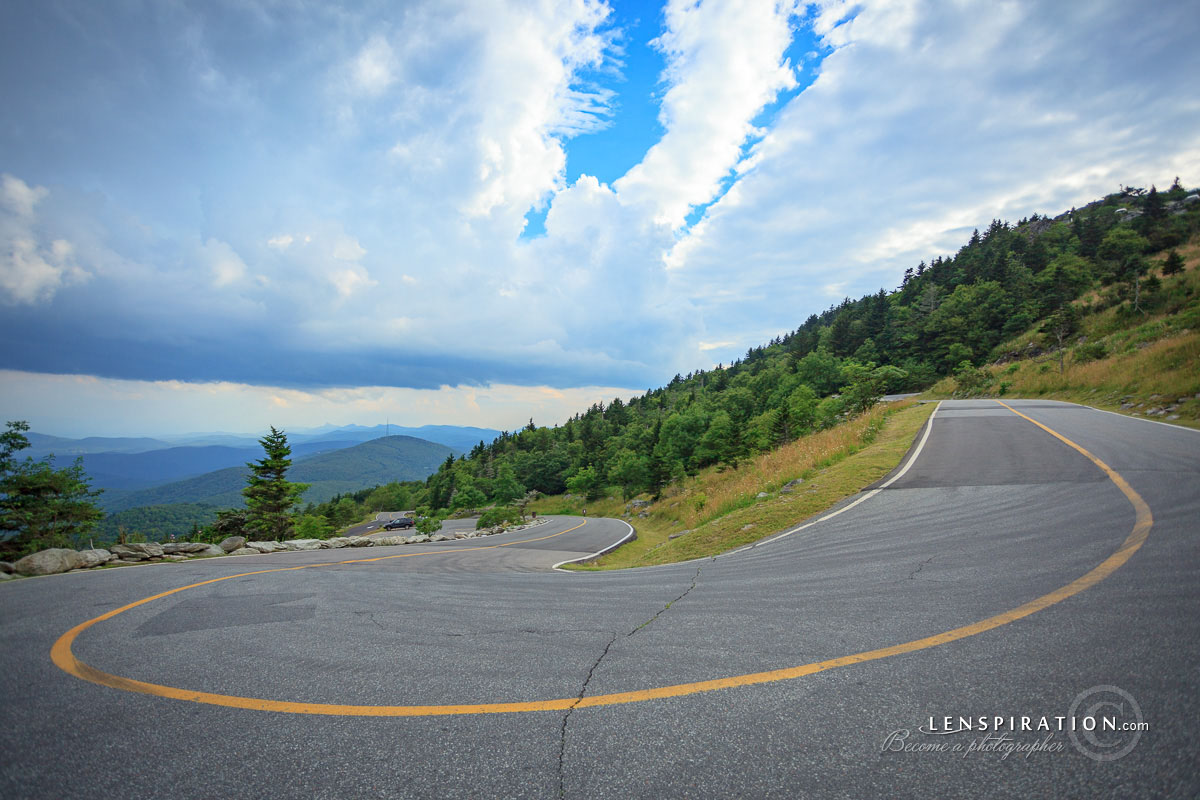
Just be careful that the background elements don’t get too small! In this photo, the road overpowers the shot and the mountains, which were the real star of the show are hardly even noticed.
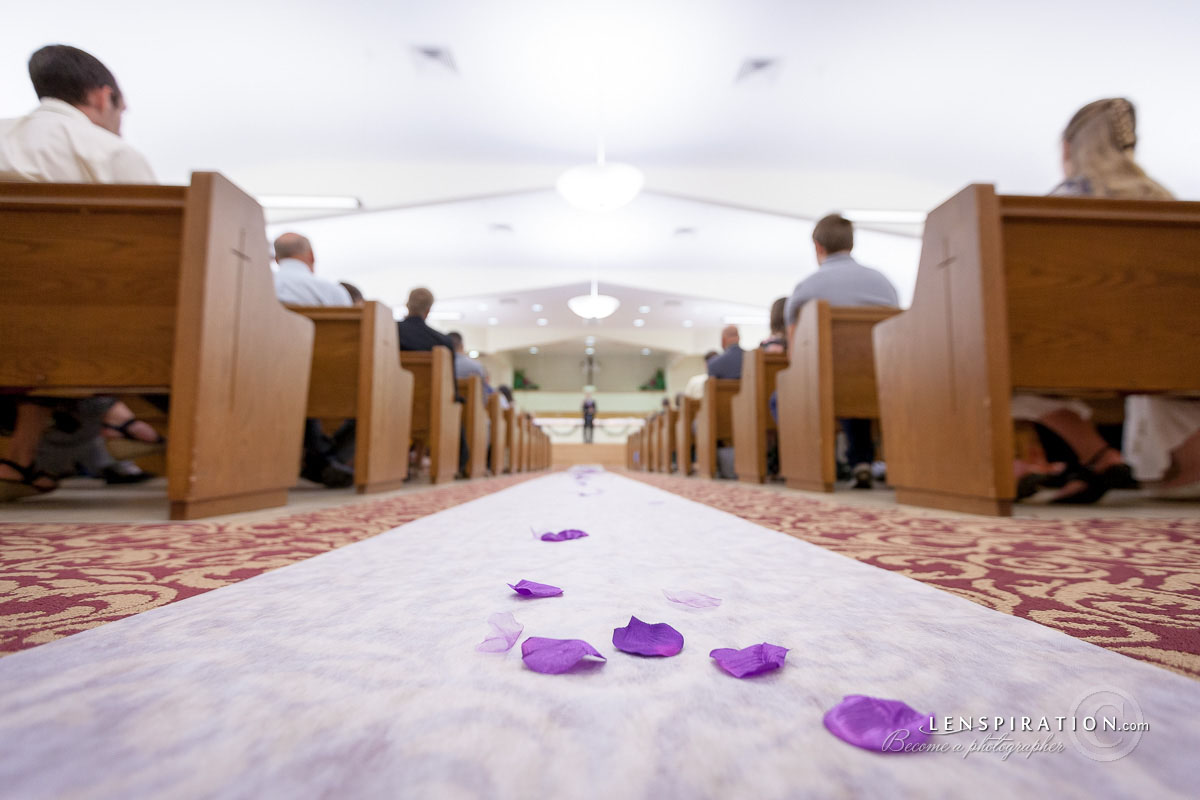
Forced perspective can be incorporated wherever you are wanting to add an artistic flare. Here’s an example of it’s use in wedding photography:
And here’s where I used it on an old pipe organ:

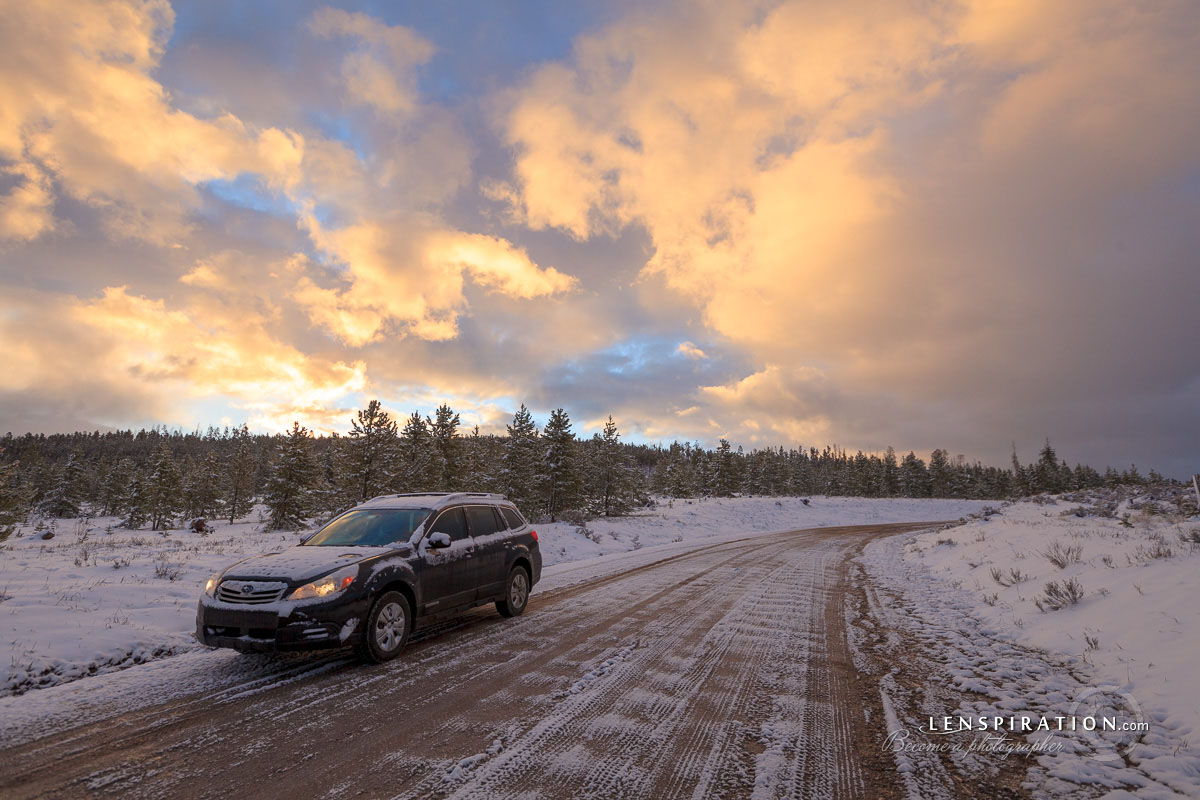
Just be careful that people and man-made objects are not distorted in a negative way by the wide angle perspective. Viewers pick up the distortion of cars, buildings and people very easily and the distraction may out-weigh the benefit of using the effect:
For Further Study
- Ian Plant’s Visual Flow: Mastering the Art of Composition*
- Learn how to photographing optical illusions using forced perspective: https://www.photoworkout.com/create-forced-perspective-images/
- Thoughts on Exaggeration, a discussion on the ethics behind the underlying principle of forced perspective
- The Technique of Forced Perspective, one of my first attempts at applying this technique
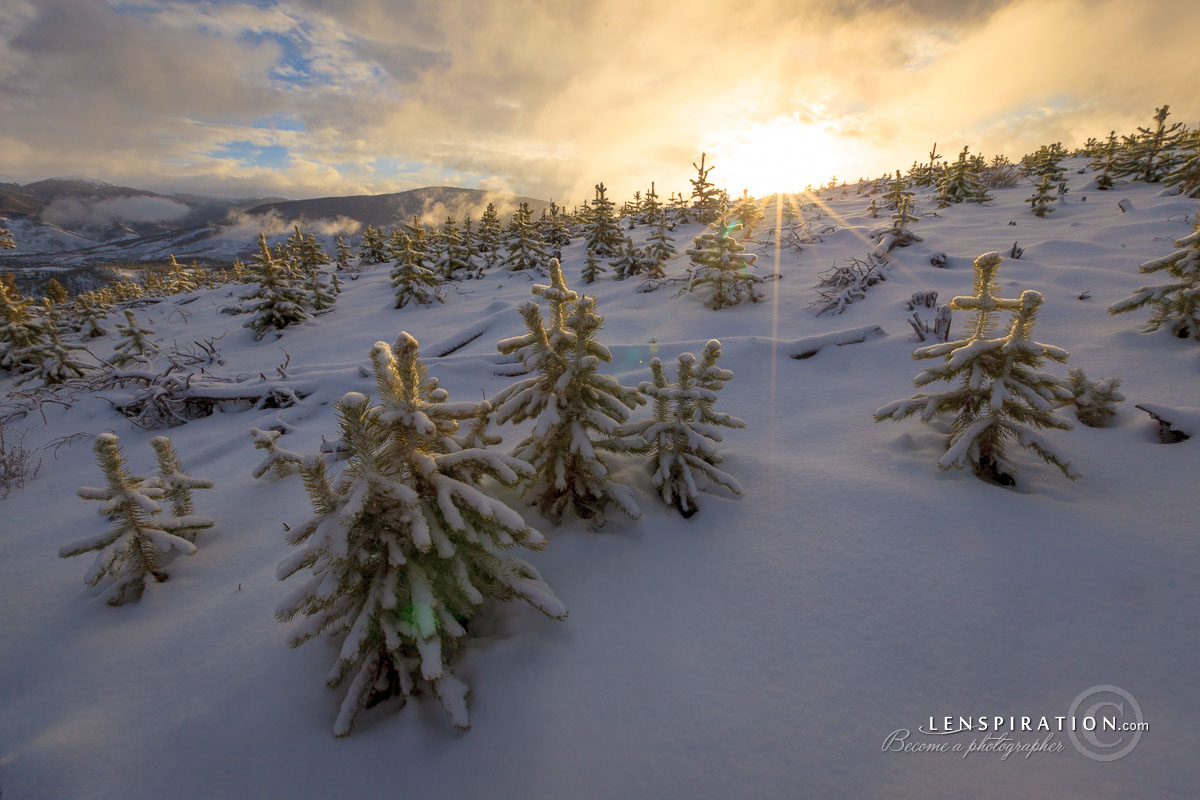
More Forced Perspective Example Images

For Further Discussion
Have a question? Have something to add? Start up a new topic on the Q&A Forum!