Forum Replies Created
-
AuthorPosts
-
 Sonja GraceParticipant
Ok, thanks for the extra advice y’all! 😃
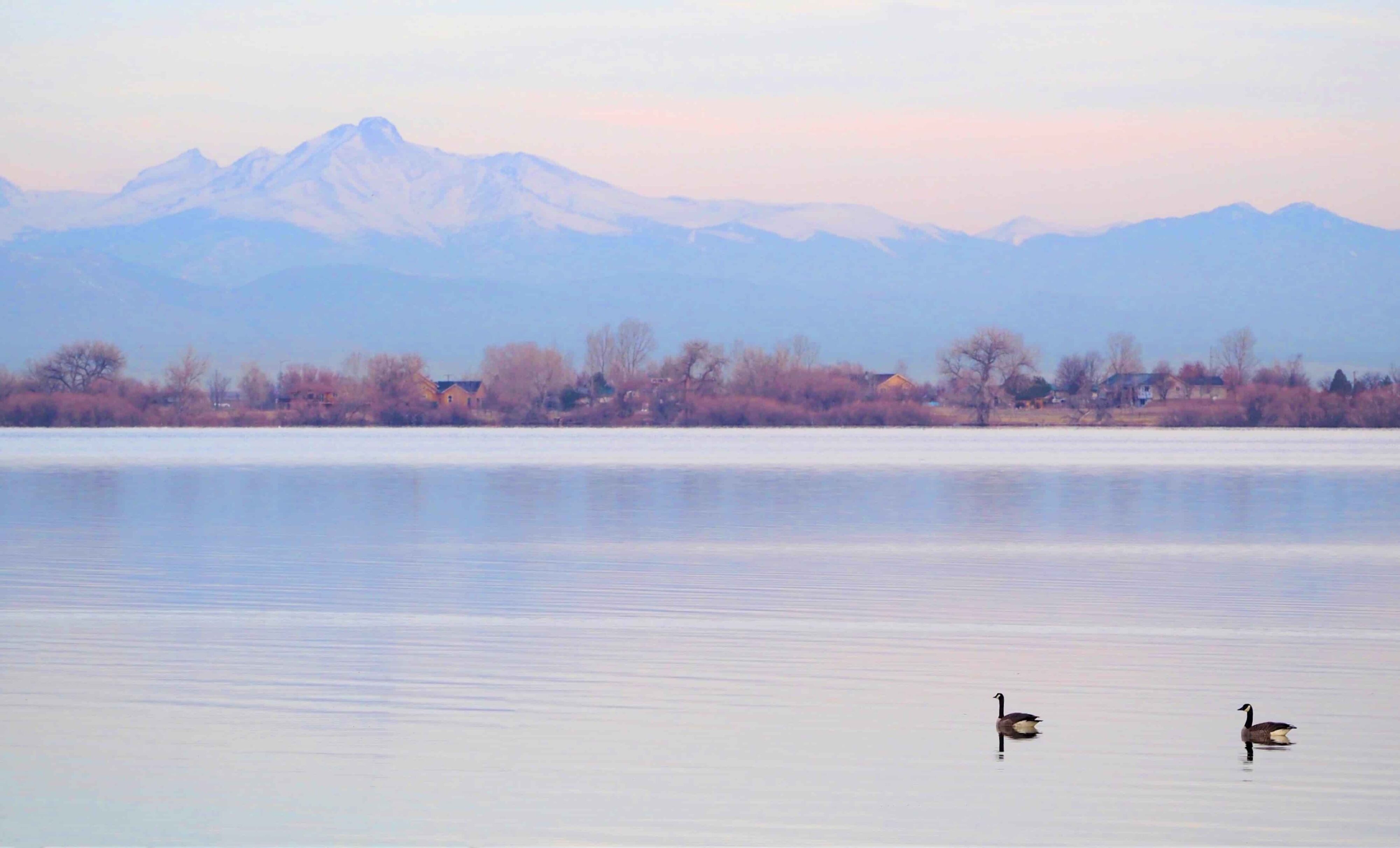
Sonja GraceParticipantHey James! You asked on the webinar where my photo was taken. I took it at Barr Lake State Park in Denver, CO. You also mentioned that you didn’t really like my edit. I’ll attach the original so you can see what I had to work with if you have any other suggestions. I had to photoshop it and do a lot of work on the colors. I think the blur on the mountains was probably smoke or smog. I could have done a better job taking the original, but I was cold and tired and wasn’t really thinking straight. It was just such a perfect moment, I wanted to see if I could fix it through editing.
Attachments:
Sonja GraceParticipantHere are my photos for this assignment!
Attachments:
Sonja GraceParticipantHere are my fall photos!
Attachments:
Sonja GraceParticipantHere are my photos for this assignment! I don’t have any access to real wheat, but I found a few weeds in my yard that kinda looked like wheat. I took a few photos of those to illustrate the Matthew 4:4 passage. Then for the Hebrews 11:3 passage, I have always thought of stars when I hear that verse, so here are some star photos I have taken. One of the Milky Way, and the other is a star trail I took on a cloudy night.
Attachments:
Sonja GraceParticipant@James-Staddon Yes, I use a 60mm macro lens. 🙂
Sonja GraceParticipantHere are my photos for this assignment! I thought honey bees would work to illustrate this verse.
Attachments:
Sonja GraceParticipantI looked into my backyard. Snow was everywhere. Birds were flocking our feeders trying to get some seeds. A fox squirrel scurried up the stairs of my deck with snow covering his face. Most of the birds that normally would be feeding on the ground were scratching through the thick snow trying to find some fallen seeds. This was not what most people imagine for the first day of Spring.
But this is Colorado after all. We can get snow from September to May here. I am always amazed by the way that the animals and birds still manage to survive the cold weather and lack of food.
I saw a great opportunity to work on photography. I opened my backdoor just wide enough for my camera to fit through and started taking pictures. Snow started blowing into our house surrounding me with puddles of melting snow. I was very cold but kept taking pictures anyways.
After I was too cold to take anymore photos, I grabbed my computer and edited all the photos I had taken. As I looked at these photos I was reminded of why I love to watch and photograph birds. They remind me of God’s faithfulness to us. It is very clear that God is the one that takes care of the birds and gives them the instincts they need to survive. I love Matthew 6:26 where it says: “Behold the fowls of the air: for they sow not, neither do they reap, nor gather into barns; yet your heavenly Father feedeth them. Are ye not much better than they?”
Attachments:
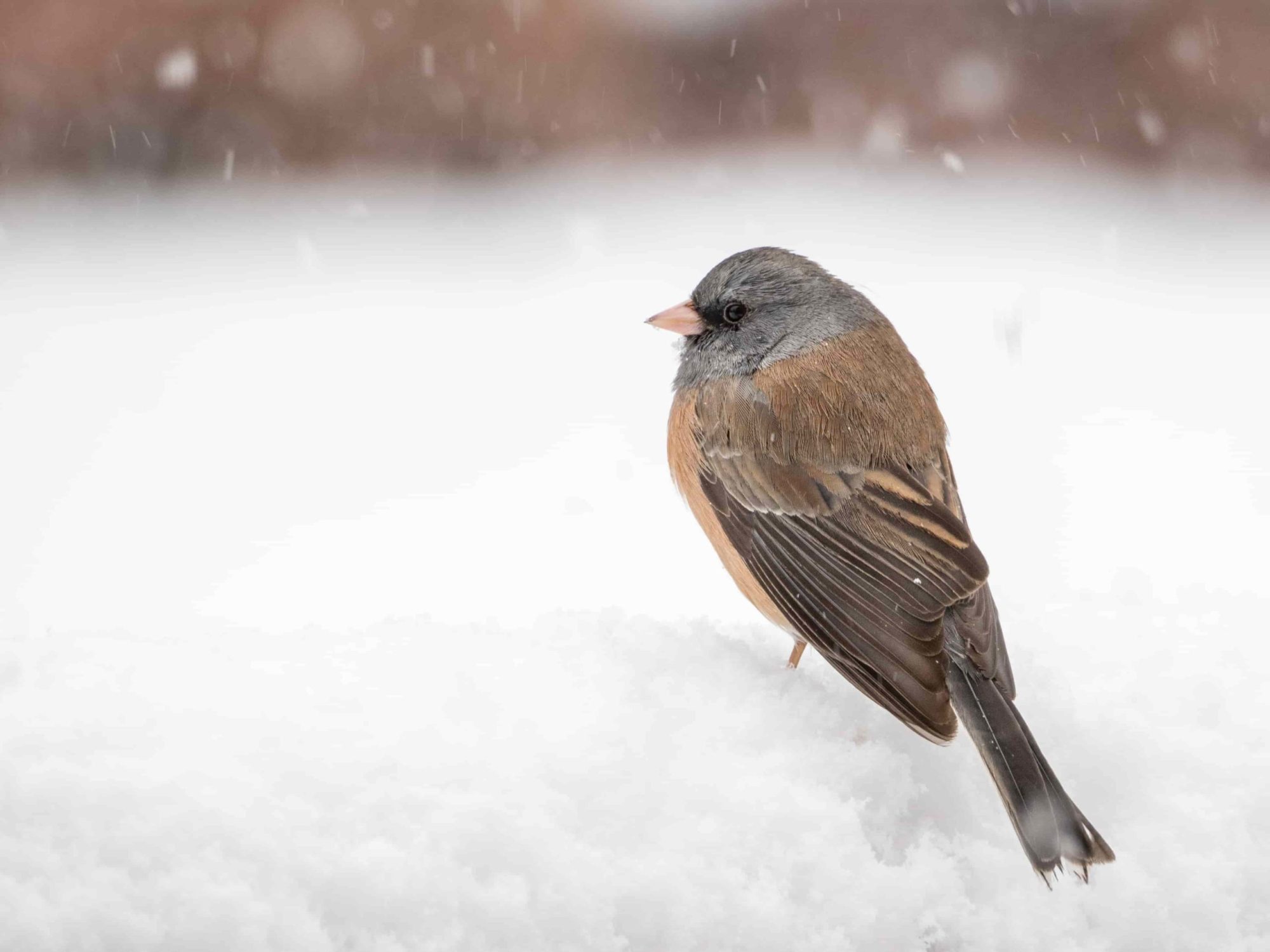
Sonja GraceParticipantHere are my submissions! I included a photo of a dark-eyed junco in a tree during a snow storm, along with some photos of flowers I photographed in the snow. 🙂
Attachments:
Sonja GraceParticipantThe female Red-winged Blackbird is much plainer than the brightly colored male which can make it harder to spot. God gave the female the perfect coloring to blend into its environment to help hide it from predators while nesting and taking care of its young. During a visit to the Creation Museum in Kentucky, I was walking in the gardens outside of the museum when I saw this blackbird come out of the reeds near a pond and fly into a Japanese maple tree where it stood out beautifully among the pink and red branches. I took several photos before it disappeared into the reeds. I was extremely thankful I was able to capture the beauty of God’s creation and see the loveliness of this typically overlooked, well-camouflaged bird.
Attachments:
Sonja GraceParticipantDid you know that hummingbirds have long, straw-like tongues? The hummingbird’s tongue can stick out double the length of its bill, and this tiny bird uses it to drink nectar. I had only recently learned about hummingbirds’ funny looking tongues when I found a hummingbird in my backyard that had just been drinking nectar from some flowers. I saw the hummingbird land on the opposite side of a tree from me. I had to find a hole in the leaves of the tree that I could focus through because the hummingbird was mostly blocked. I started to photograph the hummingbird when it flicked its tongue out several times. When I looked back at the photos I had taken I was amazed by the length of this hummingbird’s tongue!
Attachments:
Sonja GraceParticipantThe sun was shining brightly. That was disappointing. Photographing in harsh sunlight was not my first choice, but I decided to take on the challenge. I was searching for a killdeer. Killdeer are common near water, but they can also be found in fields and in dry areas even though they are shorebirds. While quietly making my way through a field near a lake where I had seen some killdeer earlier in the year, I was delighted when I heard a nearby bird call out, “kill-deer!” These birds are named after the sound of their call. I quietly got down and laid on my stomach in the field so I could photograph the killdeer at eye-level. I was really excited when the killdeer ran across the field and came really close to where I was hiding. There were some small purple wildflowers in the field that added an extra element of beauty to the photos. I spent almost an hour watching and photographing this killdeer. Despite the harsh light I was able to get some beautiful shots of it.
Attachments:
Sonja GraceParticipantI love birds! My love for bird photography started with photographing birds in my backyard for identification purposes. This love increased dramatically when I was given a nice camera for my 15th birthday. I was fascinated with the challenge of digitally capturing God’s beautiful creation, and I started learning as much as I could about photography. I didn’t realize at the time that birds are one of the most difficult subjects to photograph. On a chilly April morning, I was at Barr Lake State Park near Denver, Colorado photographing birds. My time at the lake was rewarded with capturing good images of Bald Eagles, Canada Geese, a Ring-necked Pheasant, House Finches, woodpeckers and several types of ducks. I had been outside for about 4 hours and was ready to head home. As I was walking to the car, I heard some killdeer in a field. I had been wanting some good killdeer photos, so I decided to stay a little longer. I slowly crept into the muddy field trying not to get muddy and being extremely careful not to scare the birds. There were 5 of them and it looked like they were getting ready for nesting season. I got down to the birds’ eye level and started photographing them. They didn’t seem to notice that I was in the field and sometimes came uncharacteristically close to me. I noticed that the birds were fighting with each other, so I put my camera onto a burst shooting mode and a faster shutter speed to try to freeze the action. The fight continued for a while, but the most surprising moment was when all 5 killdeer lined up perfectly and looked at me. The moment only lasted half a second before the birds were back fighting. I could not believe what had just happened and I quickly searched through all the photos I had taken to see if I had been able to capture the moment. I was absolutely thrilled when I saw this photo! I doubt I will ever capture such a perfect moment again!
Attachments:
Sonja GraceParticipantI was searching for birds to photograph in my backyard when I stopped at some wild Rocky Mountain bee plants. I knew hummingbirds loved these flowers. I put my camera onto a burst shooting mode with a fast shutter speed and continuous auto-focus. Then I waited. I had seen this hummingbird at the flowers earlier, and I really wanted to get some nice photos of it. The hummingbird came several times but kept going into the thicker areas where the flowers grew. It was really tough to get a photo with a clean background. After a long time, the hummingbird visited a flower right in front of me that was separate from the rest. I took as many photos as I could before it flew away. I was extremely thankful when I saw that all the photos I had taken of it where perfectly in focus. I am blessed to have 4 different types of hummingbirds that visit my backyard in the summer: Broad-tailed, Black-chinned, Rufous, and Calliope hummingbirds. The male hummingbirds of each species are easy to tell apart by thier brightly colored gorget (the name for a hummingbirds throat patch). However, the female hummingbirds are much more difficult to tell apart, so I am not 100% sure what type of hummingbird this is.
Attachments:
Sonja GraceParticipantHopefully this should work
Attachments:
-
AuthorPosts