
The thick morning mist around us glowed with a faint yellow hue, evidence that sunrise had arrived. Birds flitted through the thickets around us as we waited for one to land as our subject on the picturesque branch a few yards away.
I was ready with my Canon R6, equipped with the biggest lens I had ever mounted on it: a 400mm f/2.8 with a 1.4x extender, borrowed from my friend, Kevin, who was standing next to me with his R5 and another ginormous lens. We were ready for our morning wildlife photography excursion!
But the birds never came closer. The best I could manage was this blurry shot of a sparrow before the flock moved on to some evidently better location.
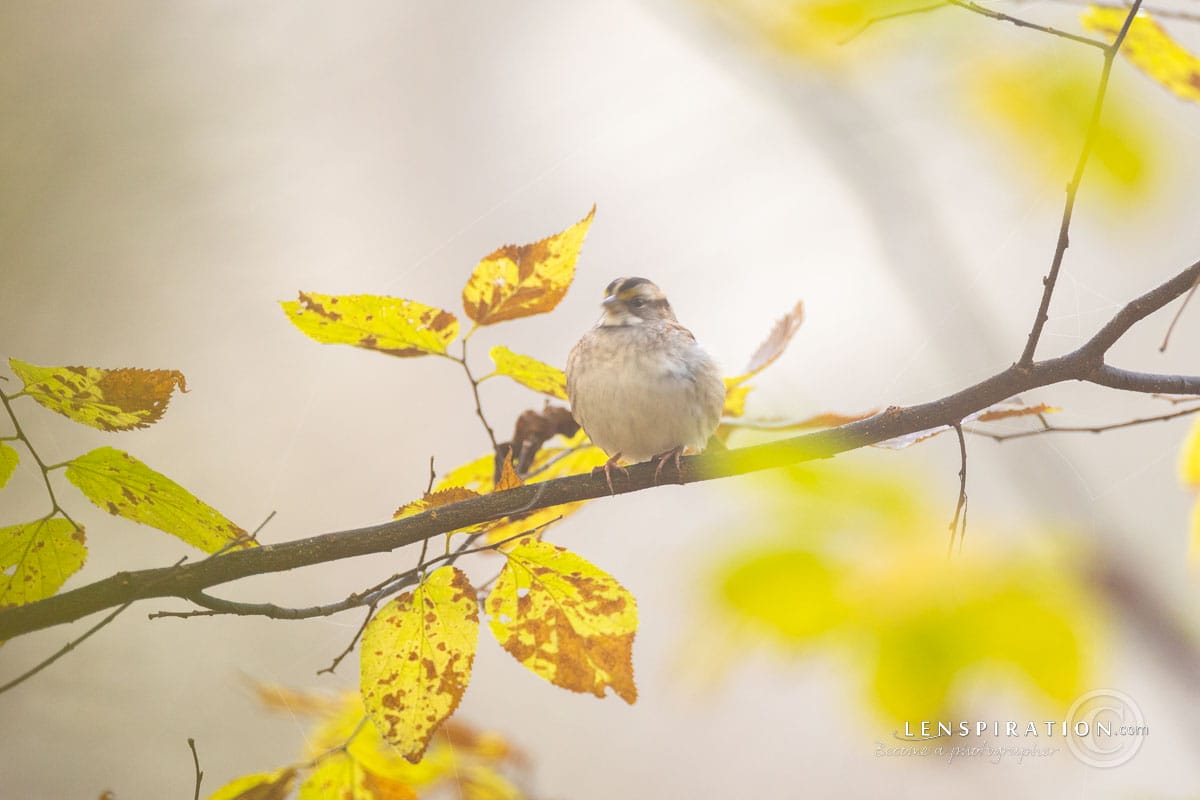
But we weren’t discouraged. This same trail in Hillandale Park, just outside of Harrisonburg, VA, was known for its white-tailed deer that were relatively tame, making them excellent subjects for wildlife photography.
And sure enough, progressing not too far down the trail, we spotted a small group of does making their way through the thicket. By this time, the sun had almost finished burning off the morning mist, letting shafts of golden light filter through the treetops. Despite the brush, we were able to fire off a few shots under the perfect lighting conditions before the group could slip away. Backlight, in fall colors . . . wow, that’s hard to beat!
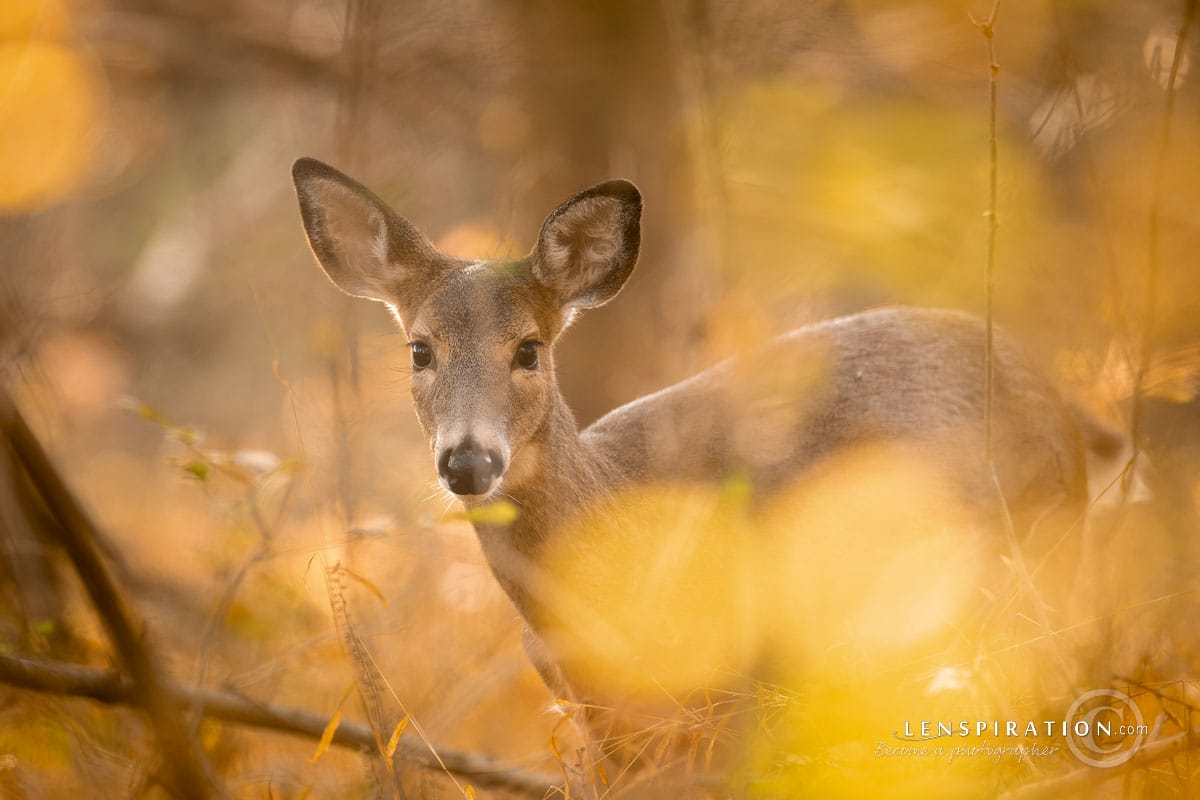
But the brush was pretty thick in this spot. Surely, there were better photos to be had if we were just patient?
The group moved on. And I slowly followed.
They stayed aloof. In the brush. I tried to be ready when they finally entered a shooting lane. But something always prevented a good photo.
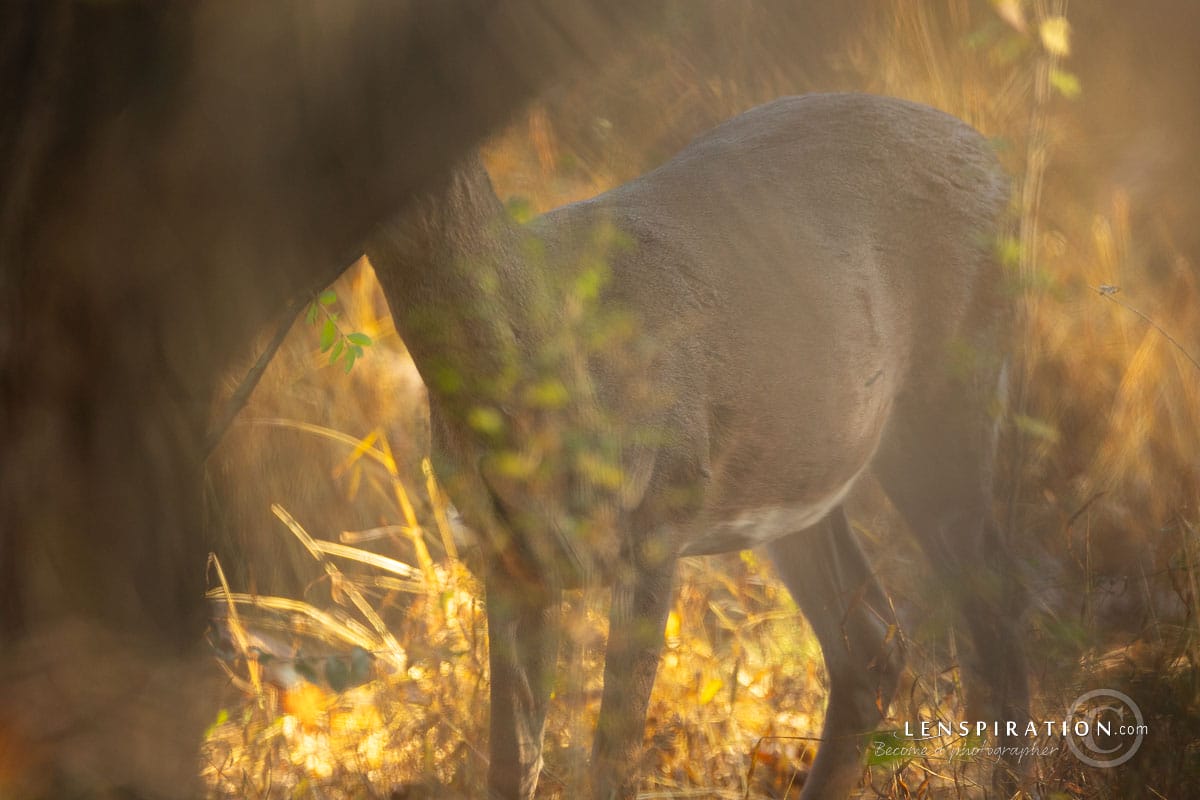
As I continued on, sometimes they would simply disappear. But eventually they would show up again! I would find another open shooting lane. Wait. And be thwarted by one thing or another. Autofocusing on brush. Soft focus. Overexposure. There was always something to frustrate my purpose!
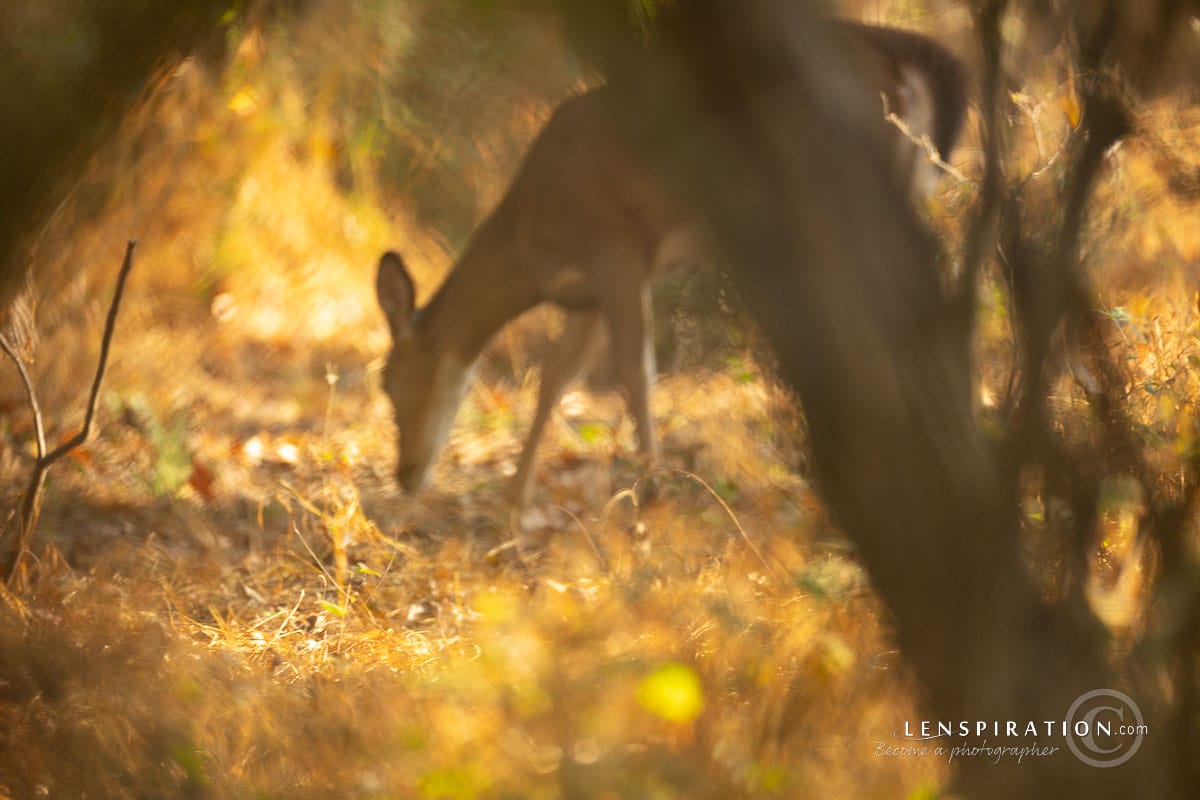
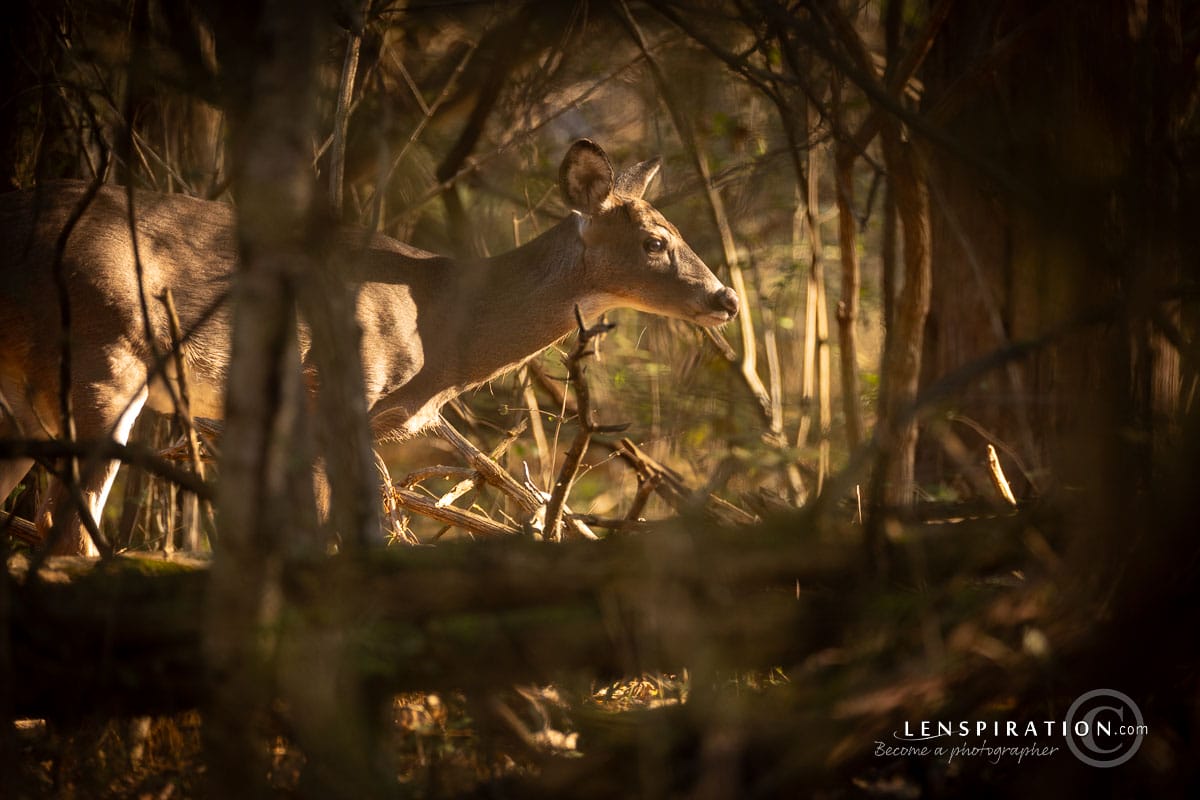
After about half an hour without any success, they finally disappeared for good.
So, Kevin and I turned our attention to easier subjects.
Documentation vs. Art
In wildlife photography, it’s easy to get into the mindset that if I get a sharp photo of an animal, I have taken a good photo. But simply recording another photo of another animal isn’t artistic photography. That’s documentation. A good photo is more than just documenting the existence of something.
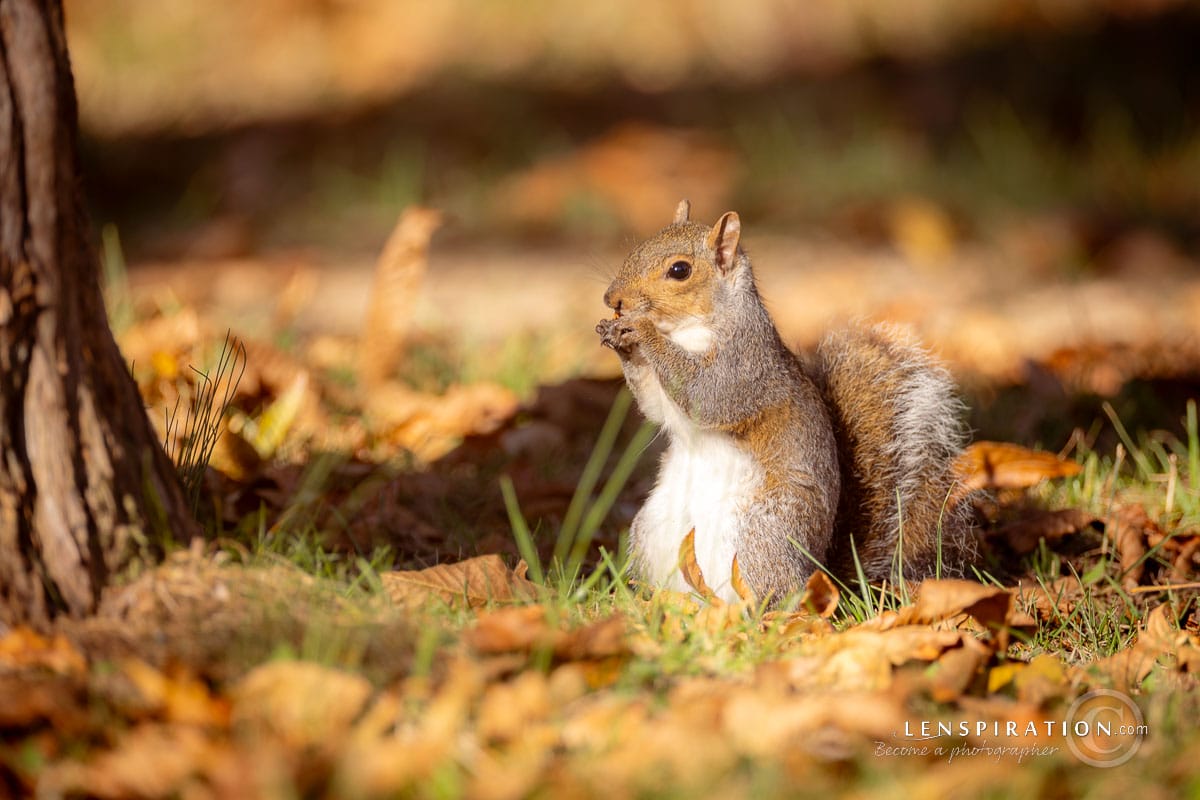
For instance, the picture of the squirrel above. I smile when I look at it because it captures its personality. It’s doing something squirrels are known to do. Always wide-eyed and watchful, even when eating. The photograph gives us a small glimpse into the nature of the animal itself. It’s not just a picture of squirrel. It’s a picture that showcases personality.
Take a look at the photos of the deer again. Which one is your favorite? My favorite is the first one, of course. But not merely because it’s sharp. The dramatic backlighting and bright spots of autumn color make it more than just another picture of a deer. It’s an artistic representation of an alert animal in its naturally beautiful environment during a specific season and moment in time. The photograph invites the viewer to enjoy a story that goes beyond the deer itself.
As With Wildlife, So With Landscape
This same idea is true in landscape photography too.
That afternoon, Kevin took me to a favorite spot of his just on the other side of the boarder into West Virginia.
After driving down narrow, mountain roads for almost an hour, we arrived at the gorgeous spot at high elevation, overlooking an open, bucolic scene that stretched down the valley all the way to the mountainous horizon.
From my experience, the best landscape photos are usually a combination of three things: dynamic light, intentional composition, and a strong subject. Since we weren’t there during the most flattering time of day, the lighting was already working against us. And simply taking snapshots of the beautiful scenery would have given me only one of the three ingredients. So, if I wanted to create a photograph that was artistic rather than merely documentary here, I would have to think creatively to incorporate as many of those three elements as I could!
And as in wildlife photography, a good landscape photo is more than just a sharp picture of a beautiful scene. It’s more than a barn in a pasture. A good photo captures the mood of a location. It attracts and engages viewers. It helps them forget about the technical aspects like time of day, or even type of lighting, and think instead about what it would be like to stand there themselves.
For instance.
Here’s a picture of the barn at that pretty spot.
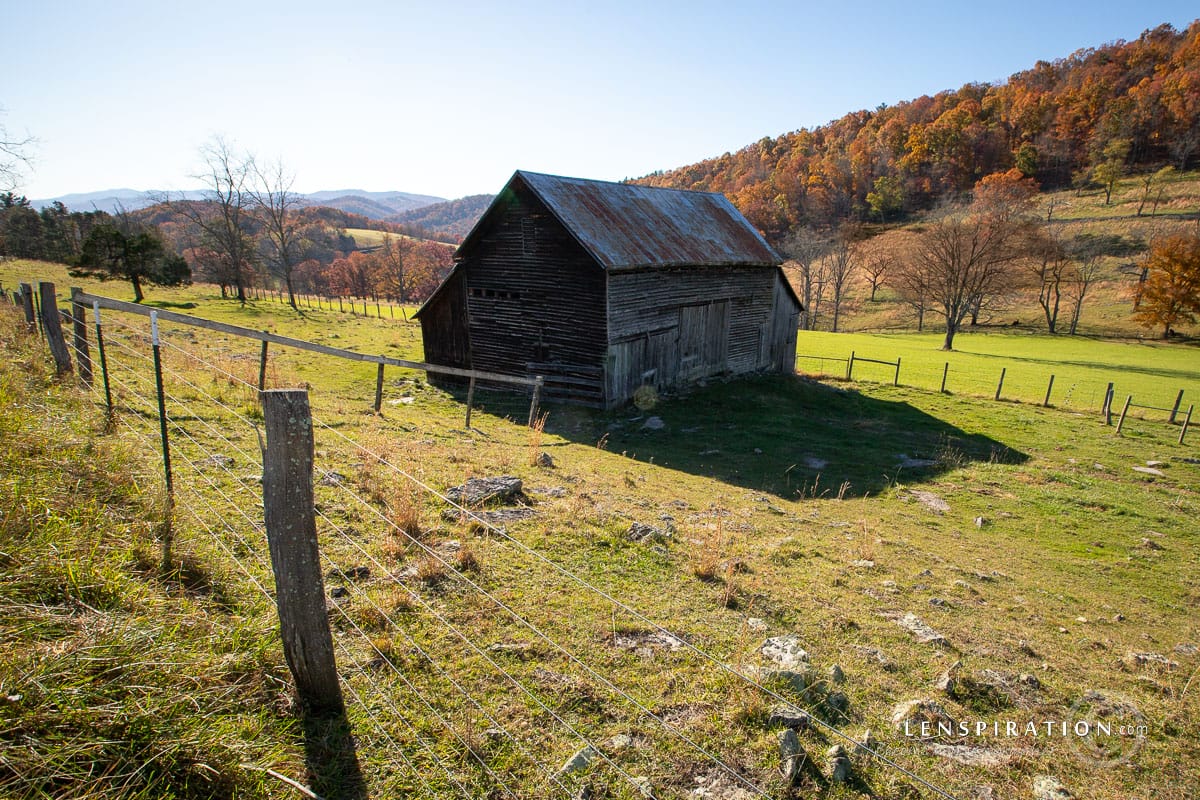
I’m documenting the truly beautiful place. It’s what I saw as I was going along on that scenic drive.
But I wanted to see if I could do more.
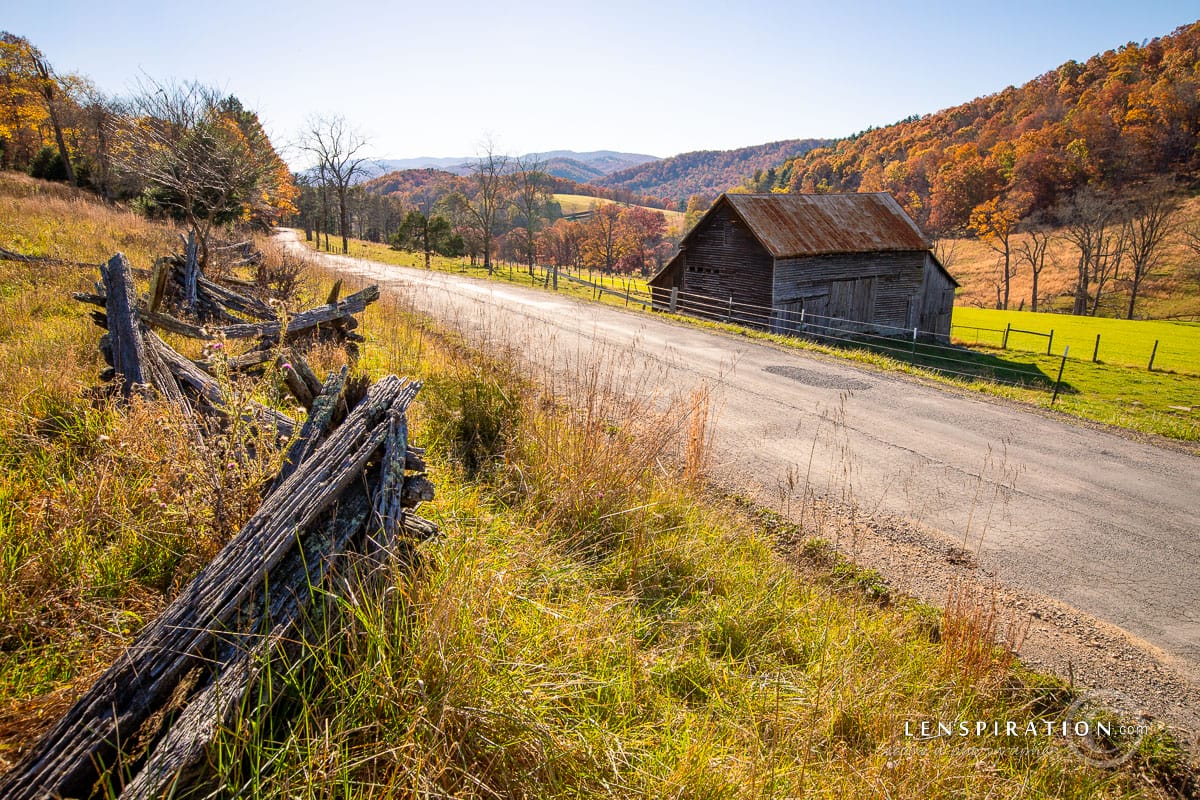
In this shot, I tried to put a little more thought into it. I’ve worked the scene to intentionally communicate to the viewer something more than just a barn. I used the road to draw the viewer deep into the scene. I used the old, broken down fence in the foreground as a foreground anchor to bring the viewer back. I edited it with intentional warmth to enhance the rustic appearance and communicate country vibes. I’m doing everything I can to entice the viewer to look more deeply at my photo, and keep them looking because of how intentionally everything is arranged.
The other side of the barn was pretty too.
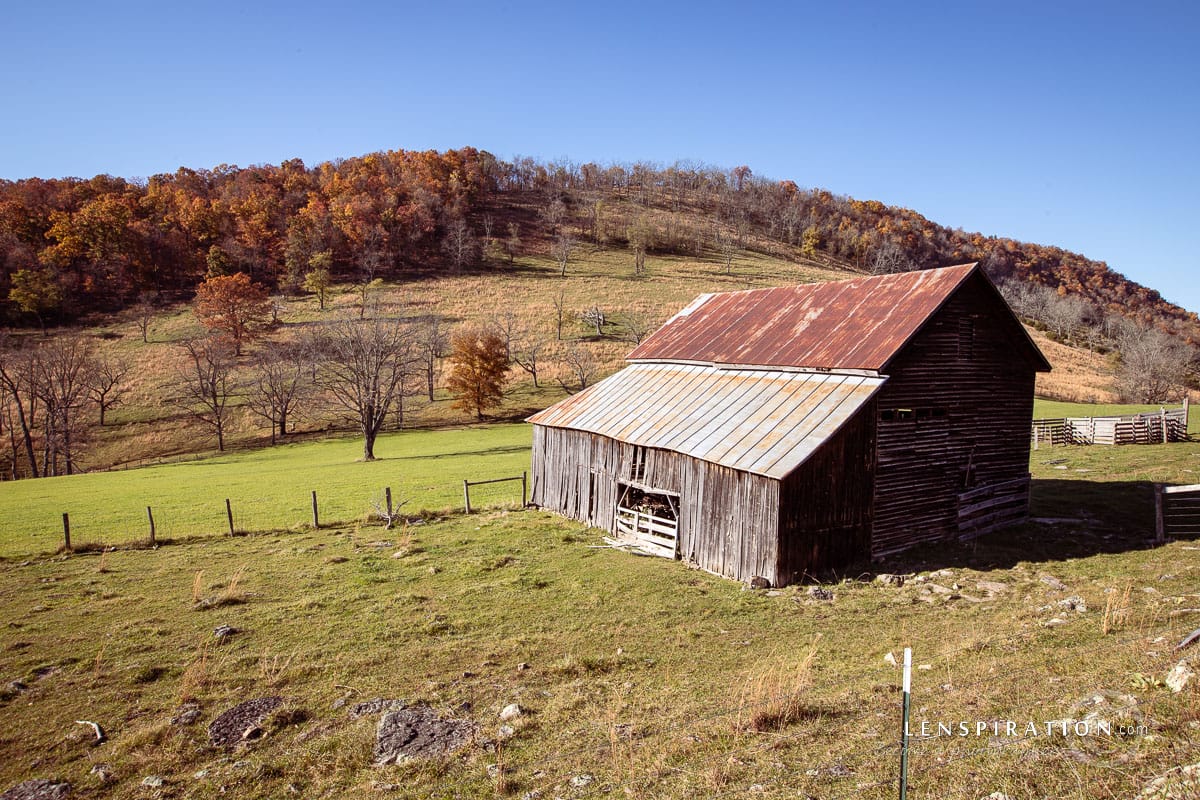
I intentionally composed my shot to keep the barn off “dead” center. That’s incorporating an intentional composition technique.
But I didn’t stop there. I looked around to see what other compositional tools I could apply to the scene.
Here’s a fence post I found.
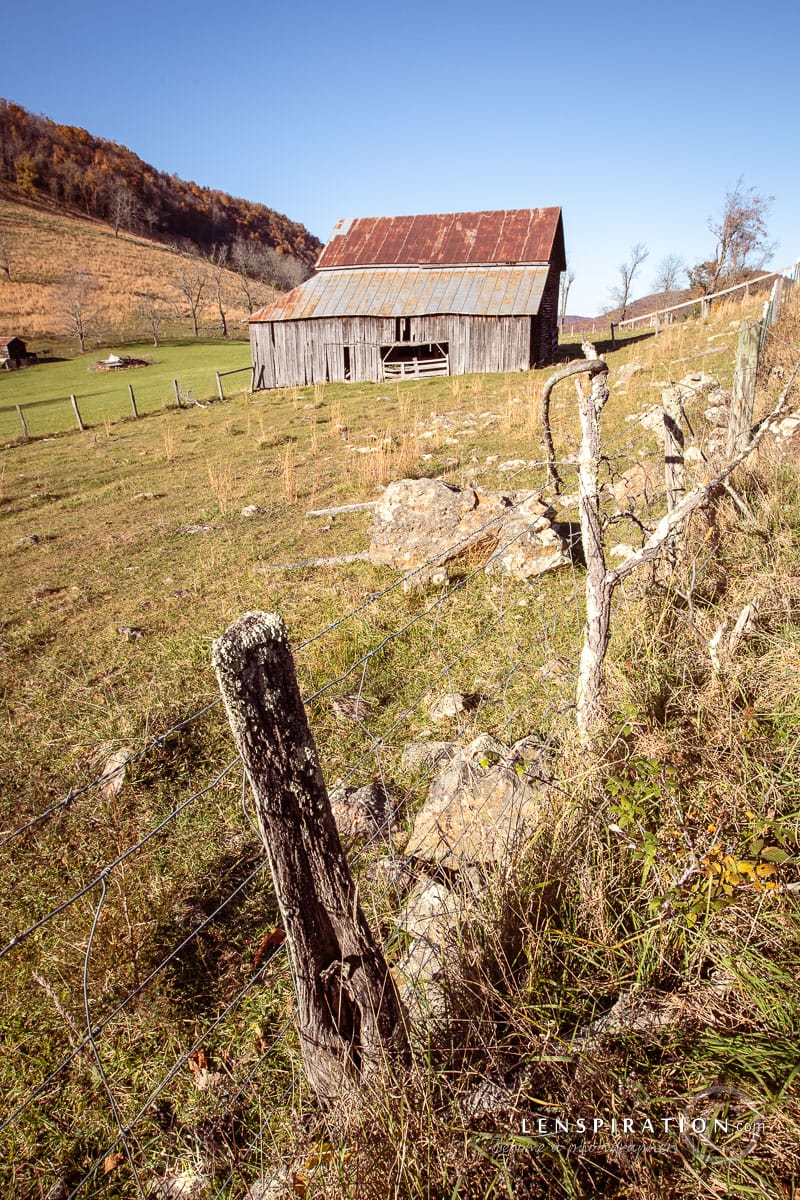
And an interesting dead branch from a tree that had fallen on the fence.
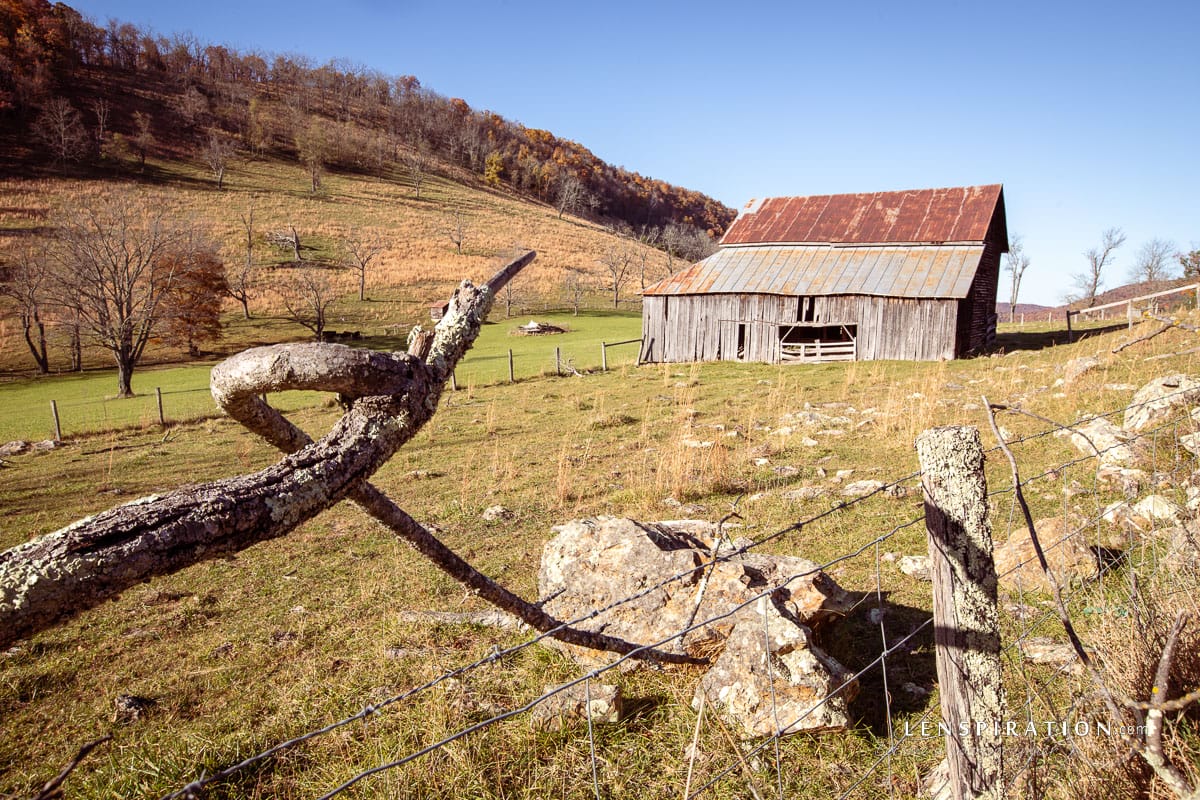
These aren’t necessarily better photos, but they do tell different stories. To some, they could be more compelling.
Starting with the strong subject, I worked the scene to see what I could find to showcase that subject in a way that would add more to the photo and tell a deeper story.
And even if it’s not the best time of day, it’s amazing what you might find!
This scene intrigued me . . .
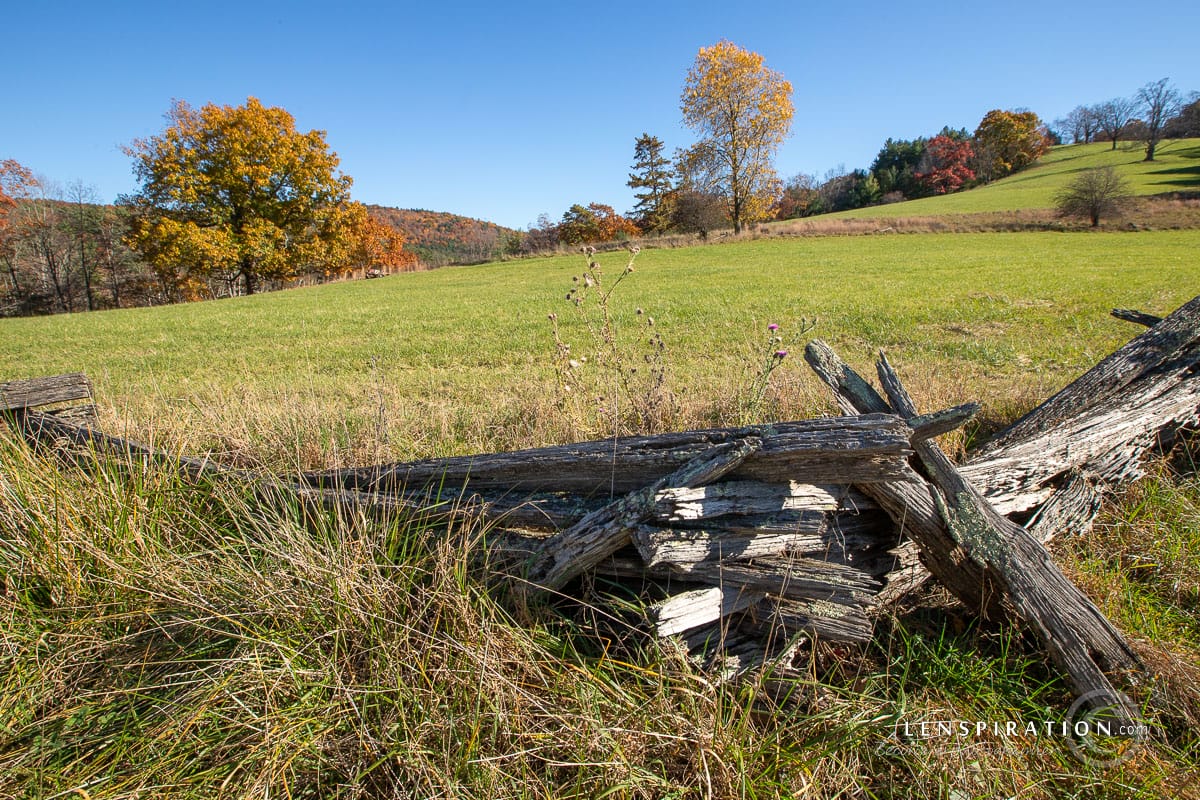
And looking around, I found this:
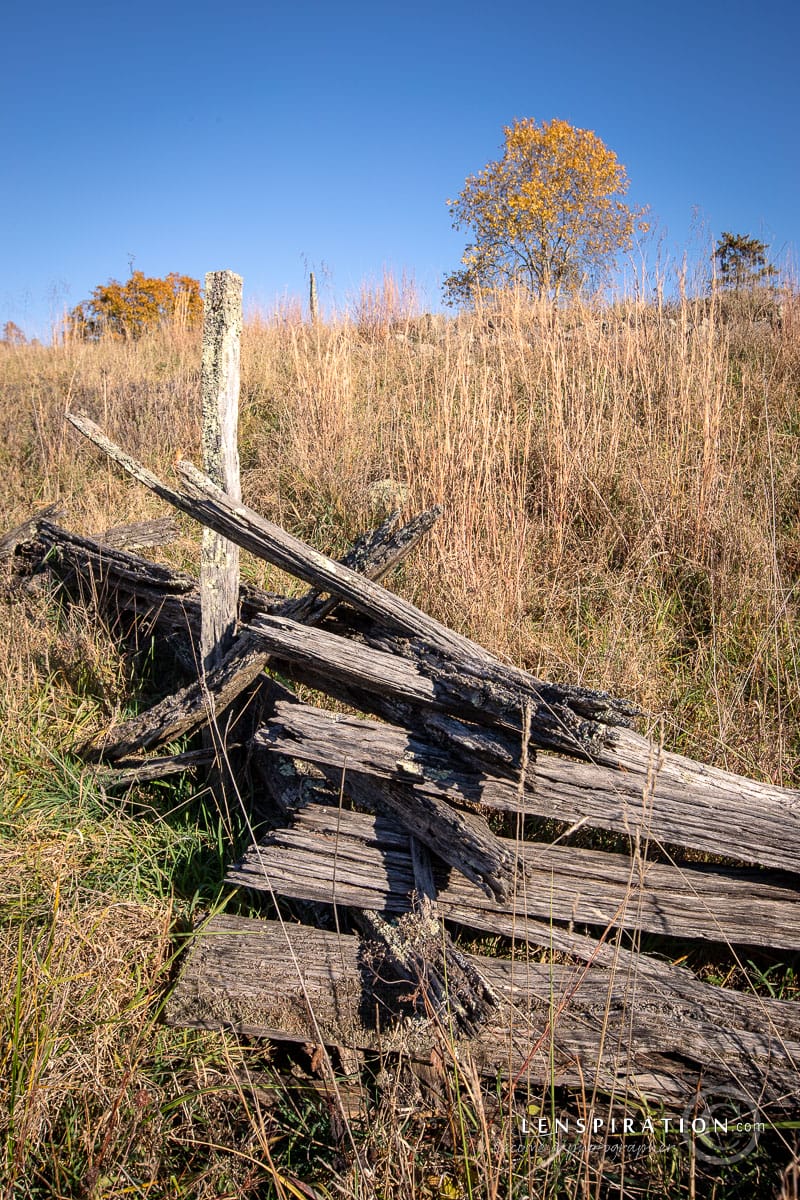
Seeing this . . .
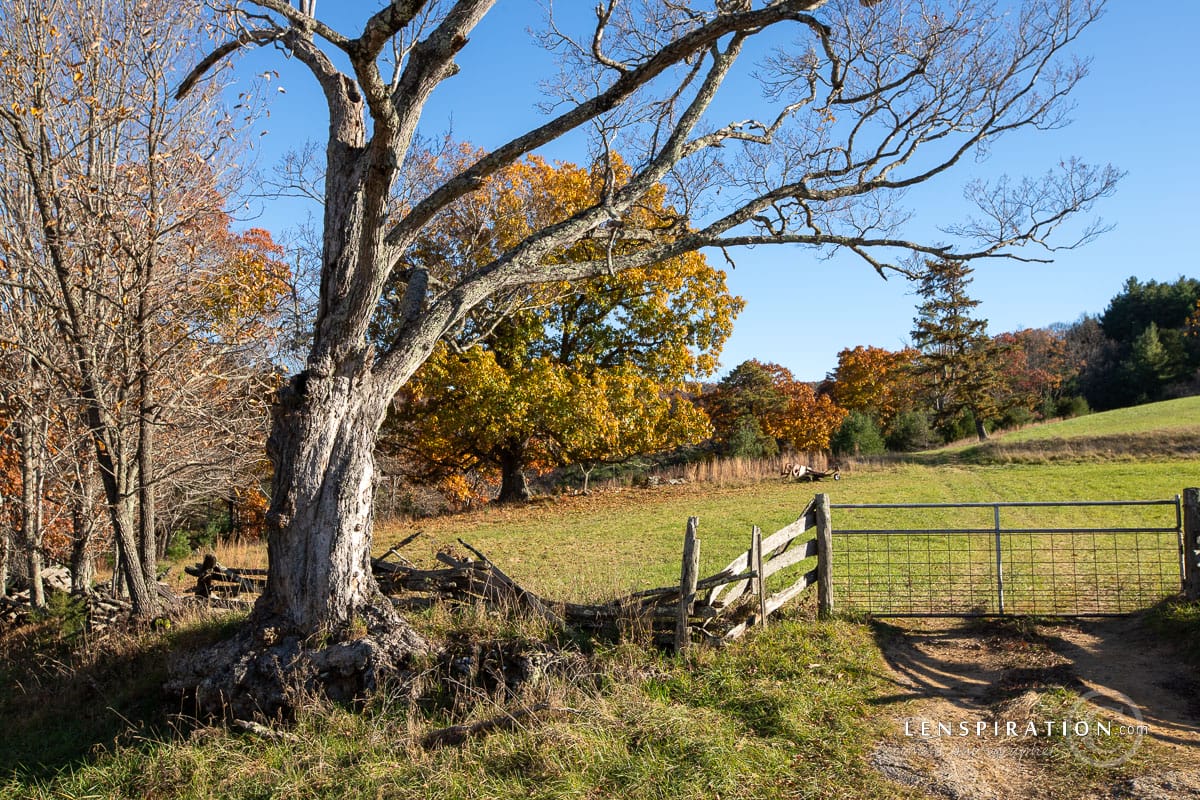
I found this:
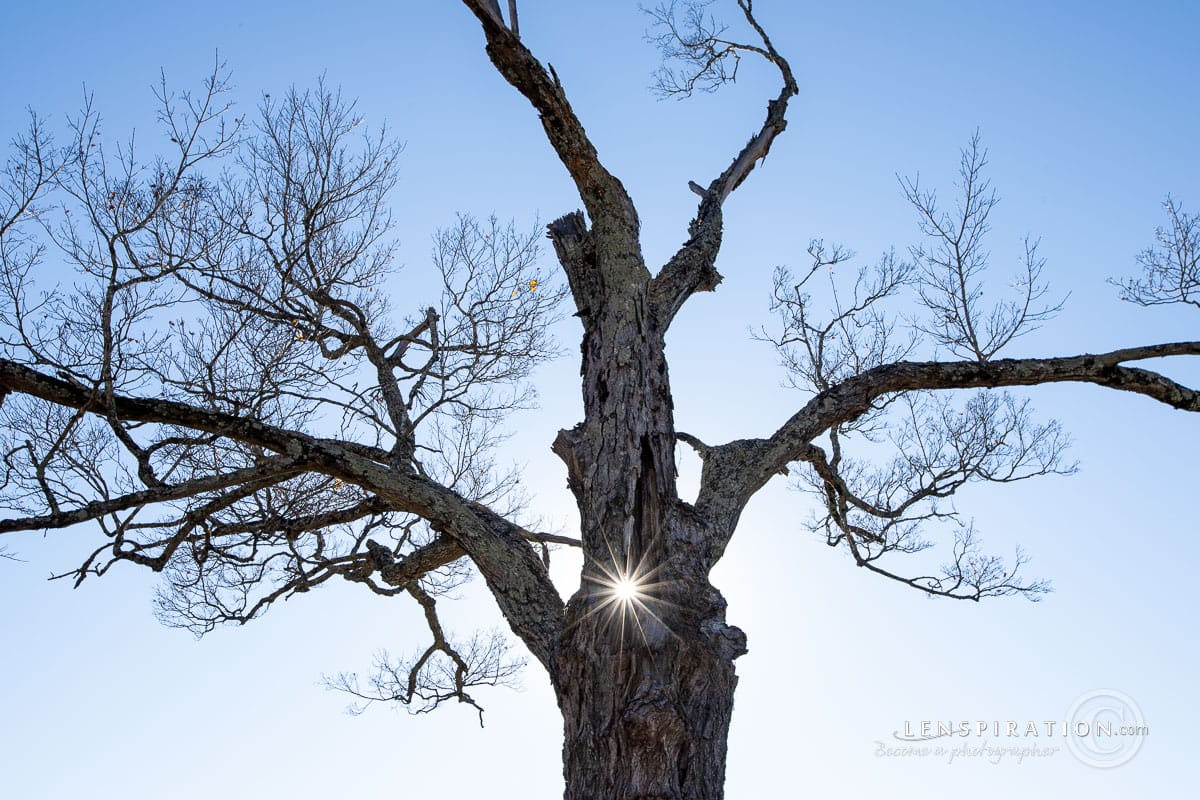
More than a just a subject
Whether you’re photographing wildlife or landscapes . . . or people or nature or architecture! It doesn’t matter the genre, a good photo does more than just document something.
And interestingly, location may not matter as much as you think. You can take incredible photos in your back yard! If you look for them. And if you work for it.
Whether you’re at home or on vacation, start with a subject. Work the scene. Apply composition tools. How is my eye flowing through the photo? What distractions can I remove? How can I organize the chaos? What attracted my eye in the first place, and how I can I amplify that? Can I come back under better lighting? Would be it look like at a different time of day? Or under moonlight? Would a different lens or a different combination of exposure settings make this subject stand out better?
Proverbs 13:4 says, “The soul of the sluggard desireth, and hath nothing: but the soul of the diligent shall be made fat.” While any photographer can be inspired by looking at beautiful artwork, only the diligent photographer will actually get out there and do what it takes to create artistic photos. They’ll put in the time to learn what makes a pretty picture pretty, and actually start applying what they learn in the real world.
Do You Have Some Good Photos?
So, do you have some good photos in your portfolio, and want to put them to good use? Kevin, the one who generously let me borrow his equipment for our almost-fruitless wildlife photography excursion that foggy morning near Harrisonburg, is the editor of Nature Friend Magazine. And they are running a photo contest through the middle of December! You can get the details about their contest here.
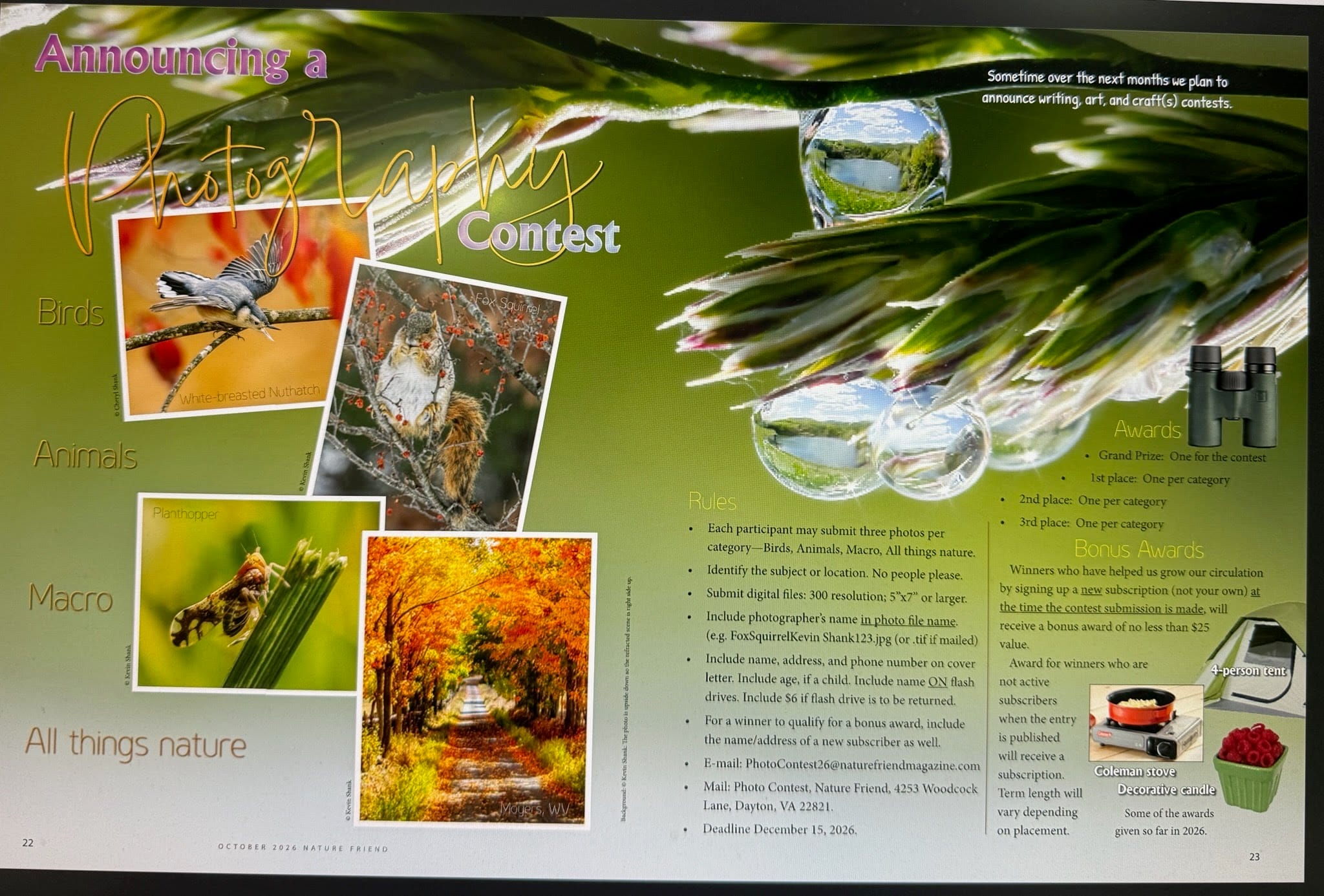
And if you’d like to have the same photos critiqued on a Lenspiration webinar, you can submit the same photos to Lenspiration by midnight, November 20. On the photo coaching webinar on November 24, I’ll analyze your photos and do the best I can to help you take your photos to the next level. More details about that here!




0 Comments